


Looking For Something? Search Our Site Here!


Uterine septum repair is a minimally invasive surgery to correct a septate uterus, a congenital condition in which a wall of tissue divides part or all of the uterine cavity. In some women, a uterine septum can be associated with recurrent miscarriage, infertility and other pregnancy complications.
The fertility specialists at Texas Fertility Center diagnose and treat uterine abnormalities that can affect reproduction. For patients with a septate uterus, treatment may involve hysteroscopic surgery to create a more normally shaped uterine cavity.
Every normal adult uterus actually starts as two separate uteri, one near each kidney. During fetal development, these separate uteri migrate toward the midline and then down into the pelvis where they fuse into one uterus. Under normal conditions, the wall between the two infantile uteri reabsorbs from the bottom of the uterus toward the top, leaving one normal, triangular shaped uterine cavity.
Sometimes this wall only partially reabsorbs or fails to reabsorb at all. The part that does not reabsorb, ie. the septum, results in a uterine cavity that is either smaller than normal or, in its most severe form, two separate cavities. The thick walled septum does not have the same blood flow through it as normal uterine tissue, and this is what leads to infertility and recurrent pregnancy loss. When an early pregnancy attaches to normal uterine tissue, the placenta starts to invade into that tissue to create a connection between the maternal and fetal cirulations. This allows the fetus to obtain oxygen and nutrition from the mother and give the mother back waste products that are then expelled. If the placenta attaches to the thick walled septum, this exchange cannot occur, potentially resulting in miscarriage.
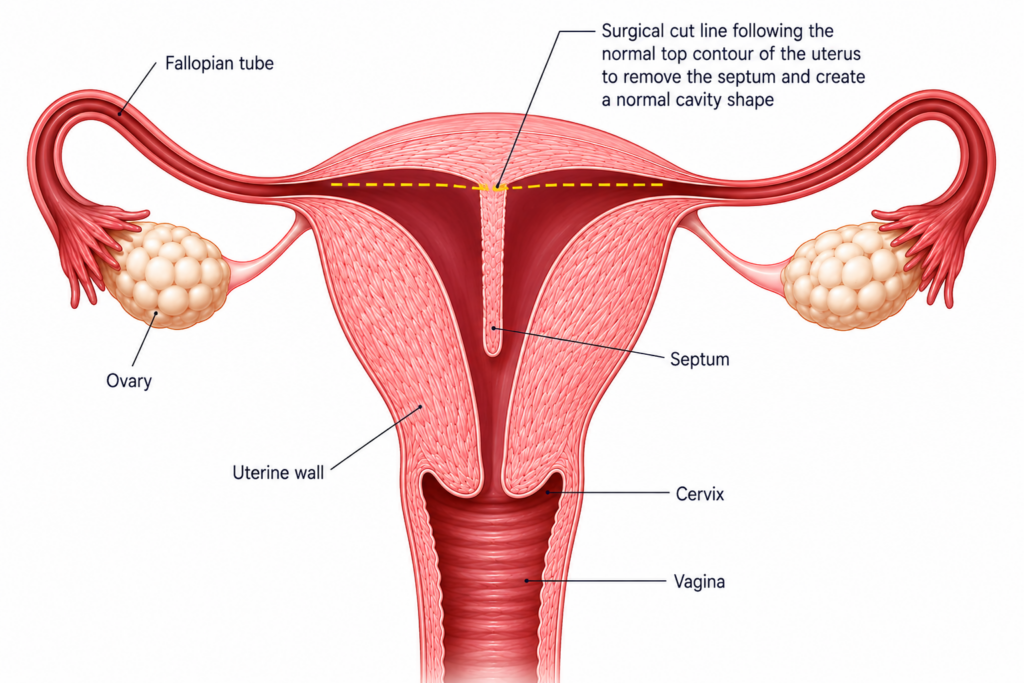
Uterine septum repair, also called a hysteroscopic metroplasty, is a surgical procedure that removes or incises the tissue that is dividing the uterine cavity. The procedure is usually performed using hysteroscopy, allowing the physician to treat the septum through the vagina and cervix without making an abdominal incision.
Not every woman with a uterine septum needs surgery. A fertility specialist can evaluate the size and location of the septum along with a patient’s reproductive and pregnancy history to determine whether treatment should be considered.
During uterine septum repair, the physician passes a thin operative telescope called a hysteroscope through the vagina and cervix and into the uterus. The hysteroscope provides a clear view of the uterine cavity.
The surgeon then uses specialized instruments to carefully incise the septum. The entire procedure typically takes 30-60 minutes and is typically performed under intravenous sedation, eliminating the need for a breathing tube or ventilator. The goal of the procedure is to eliminate the tissue dividing the uterus and create a more normal uterine cavity. Because the procedure is performed hysteroscopically, there are no abdominal incisions. Uterine septum repair is typically an outpatient procedure, meaning most patients can return home the same day.
A uterine septum does not always cause fertility or pregnancy problems. For this reason, the decision to have surgery depends on each patient’s circumstances.
Uterine septum repair may be considered for women who have experienced recurrent pregnancy loss or certain pregnancy complications. For patients experiencing infertility, a fertility specialist can evaluate whether the uterine septum may be relevant to their reproductive history and discuss the potential benefits and limitations of surgery. This individualized approach helps patients understand whether surgery makes sense before moving forward with treatment.
Recovery from hysteroscopic uterine septum repair is generally very quick. Some patients may experience mild to moderate cramping or light bleeding following the procedure. These symptoms can usually be controlled with a non-steroidal anti inflammatory pill, such as ibuprofen.
Your physician will provide instructions about physical activity, intercourse, medications and when you can begin trying to conceive or resume fertility treatment.
Depending on your individual situation, your fertility specialist may also recommend follow-up imaging or an additional evaluation of the uterine cavity to confirm that healing is progressing as expected.
One of the main reasons a patient may consider uterine septum repair is a history of recurrent pregnancy loss, as a septate uterus is associated with an increased risk of miscarriage and certain obstetric complications.
For women with recurrent pregnancy loss and a uterine septum, hysteroscopic repair may be discussed as a treatment option. However, every patient’s reproductive history is different, and surgery does not guarantee a future pregnancy or live birth.
The specialists at Texas Fertility Center can review your diagnosis, pregnancy history and fertility goals to determine whether uterine septum repair should be part of your treatment plan. Contact us today.